


The castle, doorways, walls, and streets of Zamora are impregnated by history. “Zamora no se ganó en una hora” (Zamora was not won in one hour), states the most famous saying of this city, used when something cannot be achieved in a short period of time and/or it involves a greater effort. Nevertheless, this locality, which has approximately 61,000 inhabitants, charmed celebrated writers such as Gerardo Diego, Natalia Carbajosa, Blas de Otero, or Miguel de Unamuno, authors that dedicated some of their most illustrious works to this city.
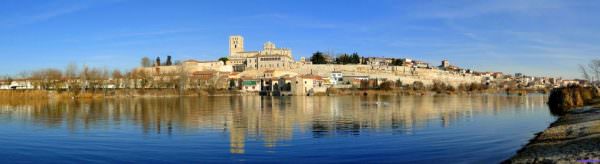
Chiselled figures, tradition, religiosity, silence, and austerity. The Holy Week is Zamora’s most relevant event. During these days, the locality is able to flaunt not only his old town, declared Historic-Artistic Grouping, but also its traditions, impregnated with passion.
Zamora’s Holy Week is one of the most important ones in Spain. In fact, it is considered to be of “International Tourism Interest”, incentive that attracts thousands of visitors every year. The greatness of this commemoration comes from the fervor Zamora’s people live this period with, together with the value, beauty, and realism of the carvings that go out in procession these days. This year, the Holy Week commences the Thursday 1st of April, also known as the “Holy or Passion Thursday”, and finishes the 21st of the same month, or the “Resurrection Sunday”.
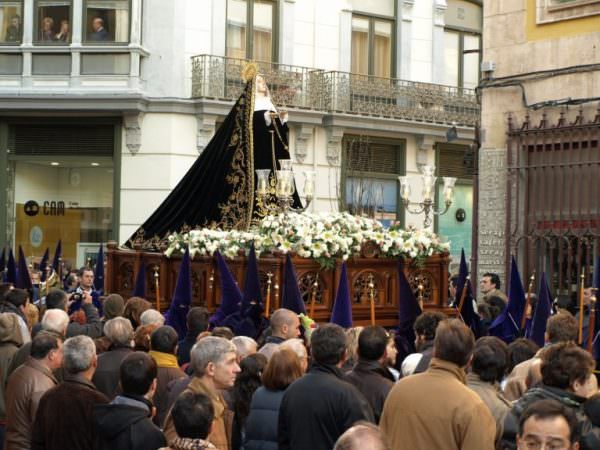
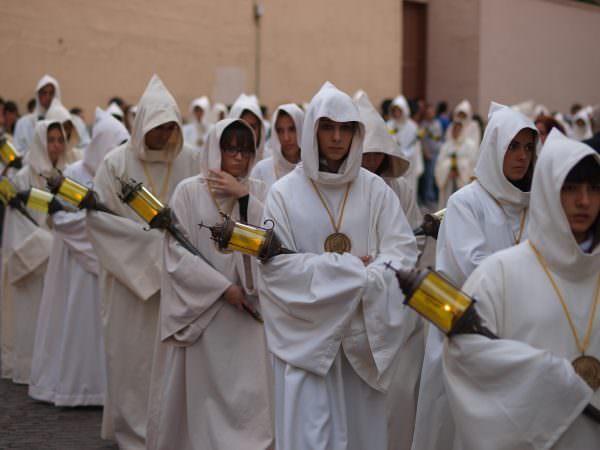
The Procession of Silence, celebrated on Holy Wednesday, is one of the most remarkable ones. Zamora’s people go out to the streets to show their devotion to the carving. This is one of the most vibrant and spectacular nights, in which the members of the fraternity Las Capas Pardas (The Brown Capes) go through the city’s streets holding lanterns in rigorous silence.
Another moment of profound emotion is the interpretation of the Thalberg’s Funeral March, performed during Jesús Nazareno’s procession when the passing «El Cinco de Copas» is occurring. This event, realised at 5:00 am, is one of the most expected moments of the week. The Jesús Nazareno fraternity commences its procession, after the Hermandad de Jesús choir’s overwhelming performance of Miserere, act that interferes on the early morning.
The fraternities of Jesús Nazareno and Las Capas Pardas are only two of the 17 that exist in this city. Each congregation has its own procession with a main carving. Some of them have even more than just one passing. Altogether 53 passings are exhibited on this city’s streets. Even though these are usually properties of the fraternities, there is a certain number of carvings that belongs to the Church.
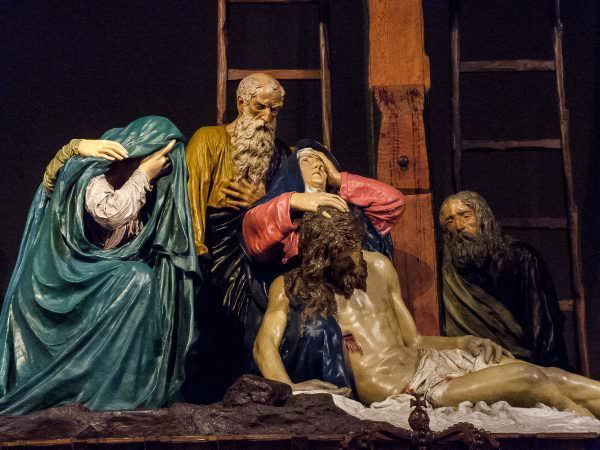
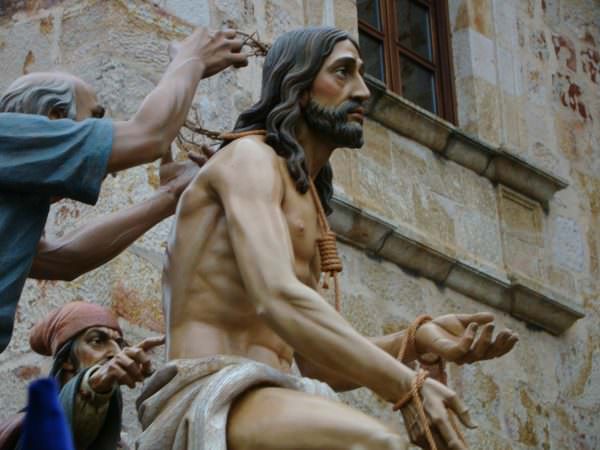
Zamora’s Holy Week is a genuine walking museum that goes through the history of art. This city enjoys a significant imagery patrimony, accomplished between the 14th and 21st centuries. Most of these artistic works are elaborated in polychrome wood alternate with the technique of glued cloth. Some of these processional floats are preserved in Zamora’s Museo de Semana Santa.
Regarding the representative gastronomy of this period, there is a Zamora’s saying that states “más vale zurrón remendado, que nada que comer” or “a mended zurrón (a leather bag) is more valuable than nothing to eat”. There are diverse dishes and sweets that are very typical in the Easter period. In Zamora’s Resurrection Sunday, the dish “Dos y pingada’, that is two fried eggs and two or three grilled slices of pork with bread, can be tasted. Also, sweets such as doughnuts, aceitadas (a circular-shaped pastries elaborated with anisette and cinnamon), or sugared almonds are very common in the days of passion.
0