


Ribera del Duero is a denominación de origen under which the vineyards located in Castilla y León are gathered, within a zone that broadens to 115 kilometers length and 35 kilometers width in the Duero river basin. It is located in the frontier of Soria, Burgos, Segovia and Valladolid.
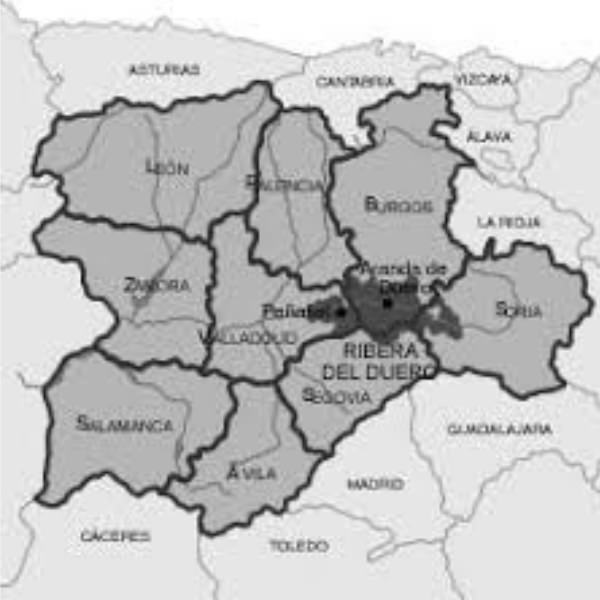
Wines with denominación de origen Ribera de Duero are mainly red wines, but there are also rosé wines. The most characteristic type of grape is called “Tinta del país,” better known as Tempranillo, which constitutes more than 90% of the production. According to Consejo Regulador, a wine must include at least 75% of Tempranillo in its elaboration to be considered denominación de origen.
At the end of 2005, the cultivation of this area constituted approximately 2% of the land dedicated to the cultivation of grapevines in Spain. Currently, it spreads to 22.530 hectares, with 8.224 winegrowers and 315 wineries. In 2016, harvesting ended with 133 million of kilos of high quality grapes, out of which 96% belonged to “tinta del país”
However, the cultivation of grapes began centuries ago. Phoenicians, through their trade, had already introduced the most advanced cultivating and production techniques 1,000 years before our day. And even the vines were more adequate.
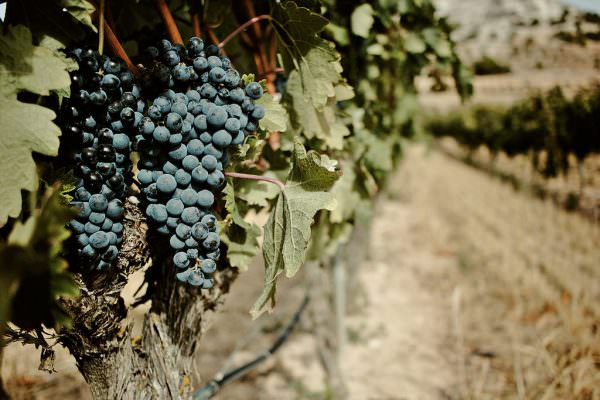
Ribera de Duero harvesting in 2015
Centuries later, Romans discovered the high quality of Hispania’s land. Ribera del Duero’s wine were given to the Roman army as a supply and still today we can find around that area Roman mosaics related to Bacchus, like the mosaic that can be found in Baños de Valdearados, 15 kilometers away from Aranda de Duero. Moreover, grave goods related to the wine ritual introduced by the Romans have been found in the necropolis of the Pintia’s Vaccean archeological site in Peñafiel.
Religious orders also had a role in spreading wine culture as they expanded during the 10th century. Three years later, monks coming from Cluny (a Benedictine monastery) already made their own wine in Valbuena de Duero.
In 1295, harvesting started to be regulated and wine production as well as its quality started to be controlled in the 15th century. From 1975 on, the great quality of the wines produced in the area started to be talked about. In 1979, it was given a provisional granting of Denominación de Origen Ribera del Duero, which was finally granted in 1982. Protos winery owns the original name “Ribera del Duero.”
The subterranean wineries are very famous in Aranda de Duero. A set of 7 kilometers of galleries and underground tunnels dug between the 12th and 18th centuries that are located in the old town. Furthermore, during the last decade activities related to wine tourism have been developed, like CIAVIN (Centro de Interpretación de la Arquitectura del Vino.)
0