


The National Archive of Simancas, also known as AGS, is a Spanish national archive located in Simancas, close to Valladolid. It was founded by Charles I in 1540 in the castle of Simancas, and it is also the first and oldest official archive of the Crown of Castile, and the place was not randomly chosen: it had to be fortified and easily defended. The building, built by Juan de Herrera, still preserves most part of the documents nowadays.
The evolution of the archive highly depended on the development of the Crown of Castile. It was the first official archive of Castile, and it is used as such since 1540, approximately dos centuries after the foundation of the archive of the Crown of Aragon. This interesting difference has been studied by historians, interested in this institution’s historical path. The fact that it was founded later has both negative, such as the delay is comparison with other European archives, and positive consequences, like the political and social context that favored its foundation, since this implied well-functioning institutions, which created documents that needed to be properly preserved.
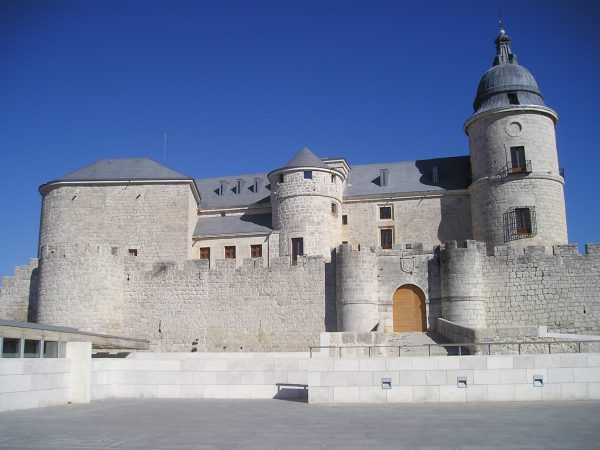
Current view of the Archive
One of the most remarkable events took place in 1588, when Philip II gave some instructions on how to administer the archive: a document to understand the management of all the documents of the peninsula. The peaks and crisis of the crown were reflected in the number of documents that arrived.
Nowadays, the documents kept there are preserved and catalogued. Furthermore, it is a museum where the large number of said documents, organized in almost 30 different sections, can be studied.
However, the building has gone through numerous changes throughout its 6 centuries of life. Not only changes in who was in charge or the building, like the restauration of one its towers in the 18th century, but also the exchange of documents or the ceasing of work, which happened during the Napoleonic Wars (1808-1814).

Document preserved since the War of Independence
But one of the most characteristic events took place during the Spanish Civil War (1936-1939). It did not have any negative impacts on the archive since Valladolid quickly fell into the Nationalist faction’s power, therefore, no battle was fought near it and no documents were lost or destroyed. During Francoism (1939-1975), the institution remained the same and no document was deliberately destroyed. In fact, during the 50s, coinciding with the 4th centenary of the death of Charles I, the entrance and stay of researchers was facilitated with the construction of a residence, since the number of researchers was increasing significantly.
On the current day, the National Archive of Simancas is an organization under the authority of Ministerio de Cultura. In 2017, it was designated World Heritage site, within the category of Memory of the World.
0