

Due to Burgos’ excellent net of communications, a fast communication with Spain and the rest of Europe is granted. This net is considered of autonomic and general interest. Moreover, Burgos represents the city with the best communication infrastructures in the community of Castile-León.
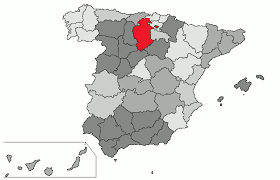
The capital of Burgos is a crossroad between North and South, as well as East and West. Its privileged localisation, approximately in the mid-north of the Peninsula, makes of Burgos a city of obligated passage in the plateau to El País Vasco and France. It also is the starting point of two of the main accesses to Cantabria. The connection between East and West facilitates the communication with the Atlantic, Mediterranean, and Cantabria’s peninsular areas.
If you have decided to get to Burgos by car, it can be the most recommended option if, apart from visiting the capital, you want to go to other towns and villages of this province.
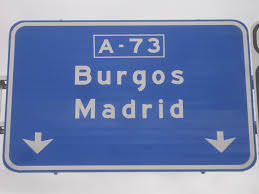
The main road passing across Burgos is the N-1, also known as Autovía del Norte or North’s Motorway. It starts from Madrid and continues up to France, passing Victoria, San Sebastián, and Irún. However, up to Burgos it turns into a toll highway, changing its denomination to AP-1.
Also there is the A-231 (or Camino de Santiago’s Motorway) that goes from Burgos to León, with the option of connection with the A-67 in Osorno, that reaches up to Cantabria; and the A-62, or Castile’s Motorway, which reaches up to Portugal, passing for Palencia, Valladolid, and Salamanca.
There is also the N-120 from Logroño to Vigo, passing through Burgos; the N-234 linking Sagunto (Valencia) with Burgos, Teruel, Calatayud and Soria; the N-623 linking to Santander, and the N-627 in direction to Aguilar de Campoo (Palencia).
Moreover, around the city there are two ring roads, the BU-11 and the BU-30, both constructed in order to avoid that the automobiles that are just passing by had to enter into the city to be able to get to other roads.
On 12 December 2008, Burgos’ new train station was inaugurated, thus eliminating the crossings that were previously in the downtown of the city.
The train station of Burgos, named “Rosa de Lima”, is located in the North of the city, in the Príncipes de Asturias Avenue, next to the district of Villamar, 5 km from the historic downtown.
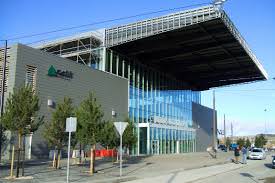
This station provides services of medium distance and grand lines. The “Alvia” high-speed rails connect Burgos with Barcelona, Bilbao, Hendaya, Gijón, Madrid, or Vigo allowing the reduction of time spent when travelling to the aforementioned cities.
It is intended that the AVE trains also arrives to the Rosa de Lima Station in the next years. In Renfe‘s website, you can check schedules, prices, and book tickets online.
From Burgos, there are diverse bus companies that have several destinations, both domestic and international.
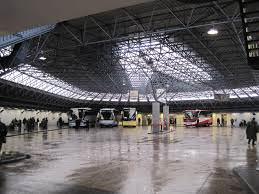
To check the destinations and schedules is necessary to visit the websites of:
Linecar (In Spanish )
Avanzabus (In Spanish)
Burgos’ civil airport, of third category, is located approximately 4 km in the Northeast of the capital. It started to operate with commercial flights on July 3 of 2008.
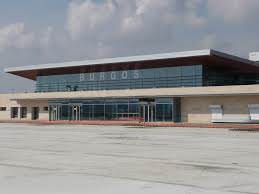
Nowadays, the only flight with passengers available at the airport of Burgos is the one with destination to Barcelona. The flight is operative on Mondays, Wednesdays, and Fridays at 16:25; and reaches its destination at 16:35. The approximate price is 60€ per flight.