


Frías is considered one of the most beautiful villages of Spain. Nevertheless, since 1435 and despite its approximately 300 inhabitants, it is classified as town, being “the smallest town of Spain”. Its natural environment where it is located, the Humión peak, and its medieval structure, declared of Cultural Interest in 2005, make this small northern town in Burgos’ province an extremely astonishing place.
One of the most surprising facts for the visitors is its title of town. This denomination proportionated by John II was almost lost due to a trade realised with Fernández de Velasco consisting in the interchange of Frías for Peñafiel. This was because Fernández de Velasco tried to deprive the town from its privileges and jurisdictions. This intent was not successful since the town stirred up a revolt and preserved its denomination as town. Nowadays, this happening is still being celebrated on 24th of June with “la Fiesta del Capitán” or “The Capitan’s Party”.
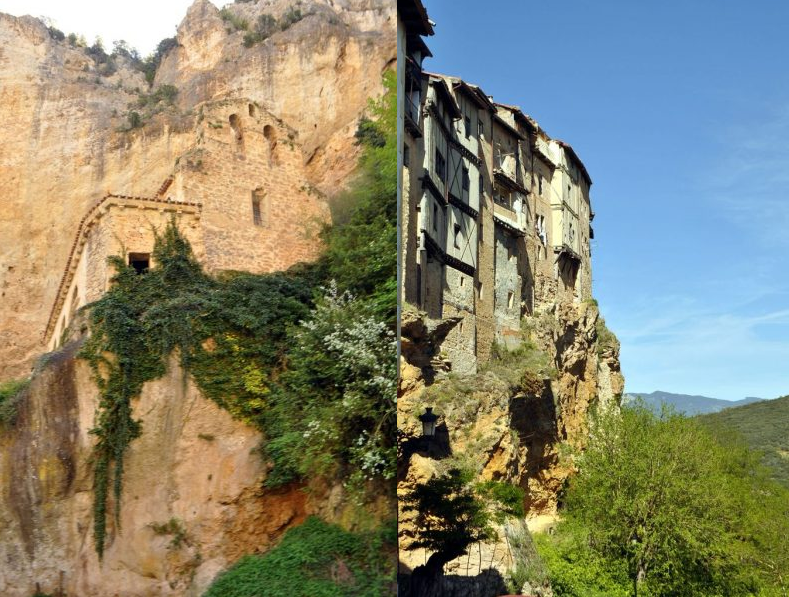
Its exuberant monumental grouping is formed by its steep streets of medieval structure, the Jewish quarter, the hanging houses, and the remains of the walled enclosure. The following emblematic buildings are also worth of being highlighted:
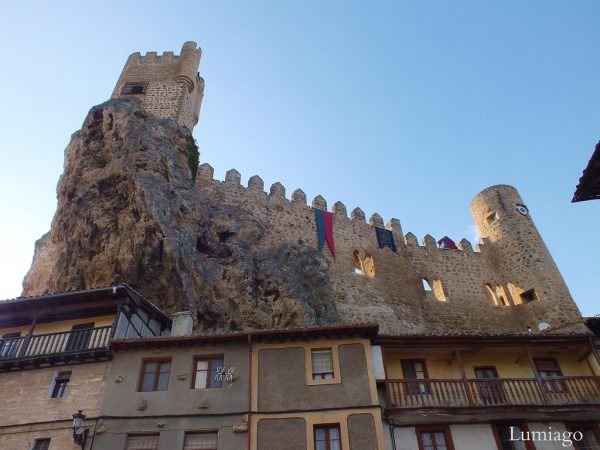
- Frías’ Castle: placed at the top of the hill and it is also known as the Castle of the Dukes of Frías or the Castle of Velascos. What can be admired nowadays is the result of several reparations realised between the 12th and 16th centuries.
- Saint Vincent Church: of Romanesque style, inside there can be observed the remains of columns, pillars, and a part of the dome, as its tower collapsed in 1904 and it had to be rebuilt.
- Saint Vincent Church: a gothic monument built on the 13th century that counts with Romanesque details on its walls.
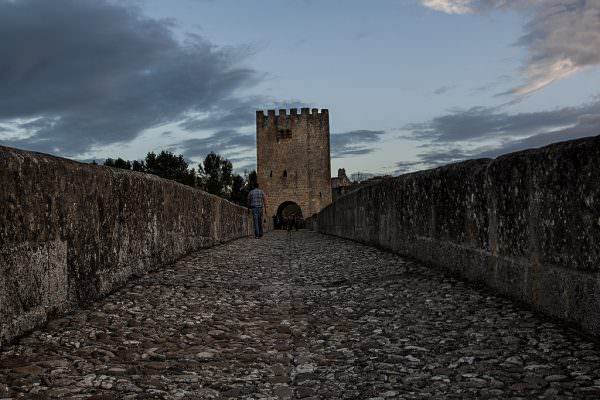
- Frías’ Medieval Bridge: one of the most admired and famous medieval bridges, which is 143 meters long and it has a weight of 11 meters.
- Saint Francisco’s Convent: built on the 13th century following a Gothic style. It only preserves its nave, its ribbed vault, and some of its original sepulchers.