


Béjar, a municipality located in Salamanca’s province, is the most prominent population centre of the southeast of this region. Its old town was declared Historic-Artistic Grouping in 1974 and the Italian Renaissance garden is one of the few that are preserved regarding this style.
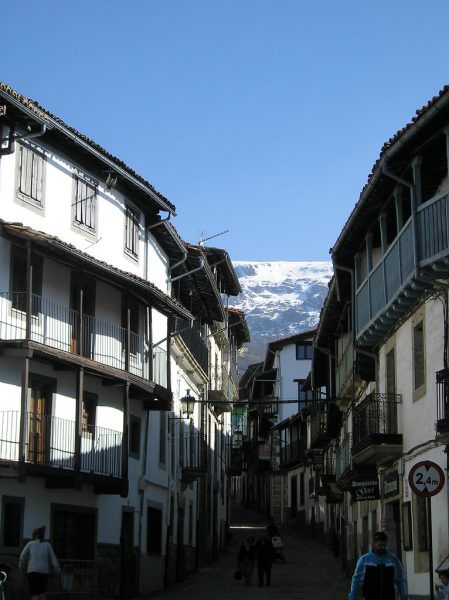
The foundation of this small town’s dates from the Spanish Reconquest’s times, but the origin concerning the town as it is dated around the year 1208. The Zúñiga’s family, lords and, subsequently, Dukes of Béjar, has a great presence in this place’s history as from 1485 until the 19th century they had the feudal dominion of this territory. The fact that the construction of the most notable architectonical instances of the town was commissioned by them is a key evidence of their power and significance.
What can we find in Béjar?
- The Ducal Palace and the Dark Chamber: residence of the Dukes of Zúñiga since the 16th century, when the fortress was rebuilt into a ducal palace. Its Renaissance style courtyard, created by the architect Pedro de Marquina, is worth of being emphasised. From the Dark Chamber’s watchtower, a panoramic view of the main square and the surroundings can be enjoyed. This building has been classified as Asset of Cultural Interest.
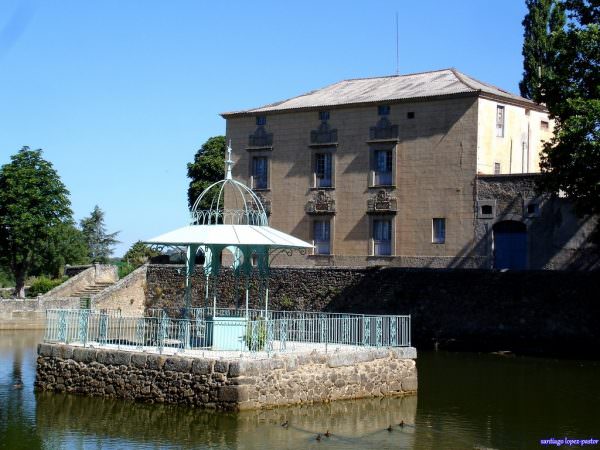
- The Renascent garden of El Bosque: one of the most unique Italian Renascent gardens that are still preserved. Its construction was commended by the Dukes in the 16th century and declared Property of Cultural Interest in 1946.
- Bullring: one of the most emblematic buildings. It was built in 1711 and is, therefore, the oldest bullring of Spain.
- Walls: the remains of the oldest layout of this fortification of medieval origin. Its historic doorways are formed by the archways of San Pedro, El Pico, and San Antón.
- Museums: This town is very rich in history and it has three highly recommended museums. In the Jewish museum “David Melul” the visitor can enjoy the past of the town of Béjar. The “Mateo Hernández” museum conveys a great part of the work of the sculptor Mateo Hernández. Finally, in the Museo de la Industria Textil de Béjar, (Béjar’s Textile Industry Museum), the visitor can observe the great history of this town’s textile activity.
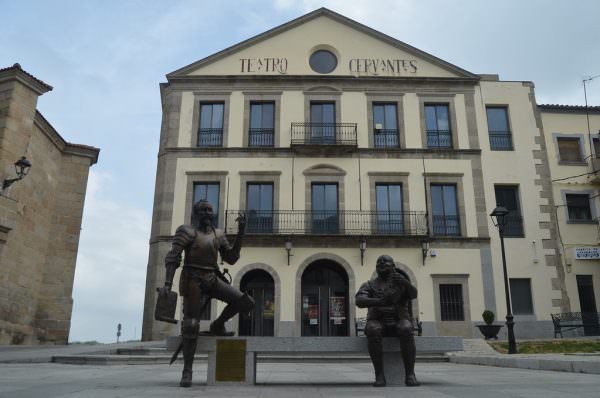
- Cervantes Theatre
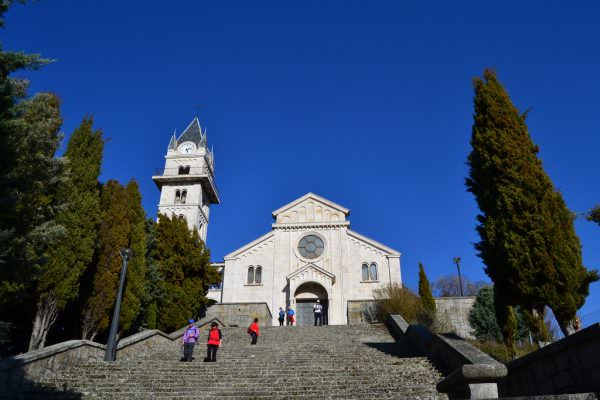
- Churches: El Salvador Church, Santiago’s Church, the Church of Santa María la Mayor, and El Pilar Church portray different artistic styles: Baroque, Romanesque, and Gothic styles.
- The convent of San Francisco‘s and the Valerio Salas Museum: is the headquarters of the Municipal Culture Centre. This convent was founded on the 13th century, being its cloister of later construction.
- The Town Hall: An instance of Renascent architecture built in 1578. Its façade is decorated with the several coats of arms of the town.