

Before talking about the traditional gastronomy of Ávila, the hard winters and cold periods that the inhabitants of this city have to undertake is greatly relevant in order to comprehend its type of gastronomy.
Taking this fact into account, those people that intend to enjoy the traditional dishes of this region will understand why Ávila’s gastronomy is commonly characterised by “heavy” dishes and a peculiar savour. The characteristic savour is due to the employment of autochthonous raw materials such as the Ávila’s livestock breeds, crab from river fishing; and delicacies such as La Moraña de Arévalo’s chickpeas (a place of Ávila).
With influences from the Arabs and the Visigoths, the gastronomy’s heritage is very abundant. In the following paragraphs, we introduce you few instances of Ávila’s traditional gastronomy.
The dish known as “Patatas Revolconas” or “Patatas Meneas” is also typical of the autonomous community of Extremadura and Salamanca, but, in Ávila it has a different savour due to the employed ingredients that are characteristic of the area.
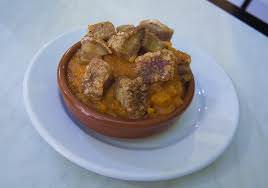
It is a dish formed by a smooth mix of mashed potatoes, paprika, and a little bit of garlic. This delicious dish has a characteristic reddish colour due to the paprika. It is also worth of mentioning that it is usually accompanied by fried torreznos (crunchy strips of bacon).
The dish called Judías del Barco de Ávila Guisadas, or El Barco de Ávila’s Stewed Beans, is very common in the winter period and, since 1989, it has the oldest Specific Denomination in Spain.

It has a characteristic white colour and it is decorated with local spices.
This sweet named Yemas de Santa Teresa (Santa’s Teresa’s Yolks) was originated under the Andalusian influence in Ávila’s province.
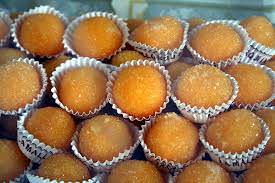
Its ingredients are beat yolks mixed with sirup, cinnamon, and lemon juice. After applying heat to this mixture, it has to be cooled down while the confectioners are molding it into its final round shape.