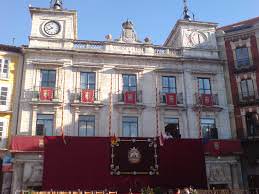

Burgos is a Spanish municipality and city located in the central part of the North of the Iberian Peninsula. The city is the capital of the homonymous province that is integrated in the autonomous community of Castile-León. In 2018, it had a registered population of 175,921 inhabitants scattered across an area of 107,06 km2, being the 36th most populated municipality of Spain and the second of its autonomous community. Its metropolitan area, formed by a high number of small municipalities, has about 20,000 inhabitants that, added to the central municipality, forms an urban area of 200,000 inhabitants.
Burgos has been the birthplace of several famous characters, such as the judoka Esther San Miguel Busto; the first translator that transcribed the New Testament into Spanish since its Greek origin, Francisco de Enzinas; the musician Antonio José Martínez Palacios, or the military hero Juan Martín Díez, also known as “El Empecinado” (the Stubborn).
Burgos is greatly “emotionally” related to Rodrigo Díaz de Vivar, or how he is more popularly known as, “El Cid”. Although Rodrigo was most likely born in a village of Burgos named Vivar, he spend a great part of his military life in the areas of Zaragoza and Valencia’s bands and, even though that in El Cantar de Mío Cid (book that recollects El Cid’s stories) is stated that its inhabitants refused to help him due to their fear of Alphonse VI, Burgos is commonly known as El Cid’s city.
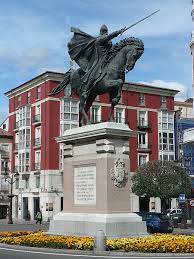
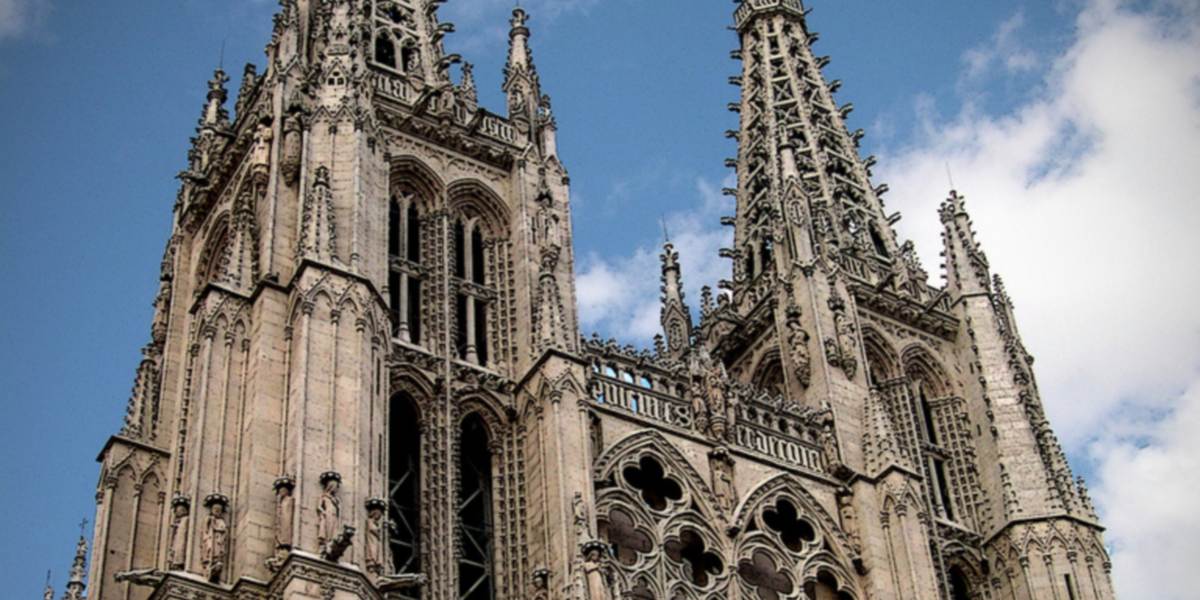
According to El Cantar, El Cid left the city passing through the current Puerta or Arco de Santa María (Saint Mary’s Doorway or Arc) and crossing the Arlazón River, camped outside the city, and slept in the open, since the king Alphonse had prohibited to the inhabitants of Burgos help or give refuge to El Cid under the punishment of losing all of their properties and even their eyes. Before all this, El Cid kneeled in the currently non-existing Saint Mary Church, where the Gothic cathedral is placed nowadays. This cathedral is the same place where the bodies of Rodrigo and his wife Jimena are kept at the present time. In Saint Mary’s Arch, apart from the remains of Mudejar plasterworks, there is a room dedicated to El Cid where the visitors have the possibility of observing several interesting and unique objects such as a realistic reproduction of El Cantar or even …the radius bone of the Castilian knight’s left arm!
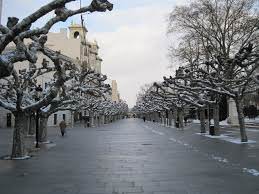
Before travelling to Burgos, we recommend checking the meteorological situation in the city. No matter if it is on rainy, snowy, or sunny days, Burgos is a beautiful city for sightseeing; but it is more convenient to be prepared with the adequate clothing depending on the weather.
Normally, the business hours of the shops and services of Burgos are from 10:00 to 14:00 and from 17:00 to 20:00. On Saturday afternoon, only a small number of shops are open. On Sundays and public holidays, in most of the cases, the shops in Burgos are closed.
The shopping malls are open from Monday to Saturday and from 10:00 to 22:00. On Sundays and public holidays, they are usually closed. However, by clicking on the following link you can check the business hours in 2019 (in Spanish).
Urgency Services: 112
National Police: 091
Guardia Civil (Spanish military police): 062
Information of Burgos’ City Hall: 010
Burgos’s code: 847 // 947