


This archaeological site is located in the province of Zamora, more specifically, in the locality of Santa Eulalia de Tábara, place that can be found in the right side of the Esla River. This field, situated in the top of the hill, has been there for more than 2,000 years.
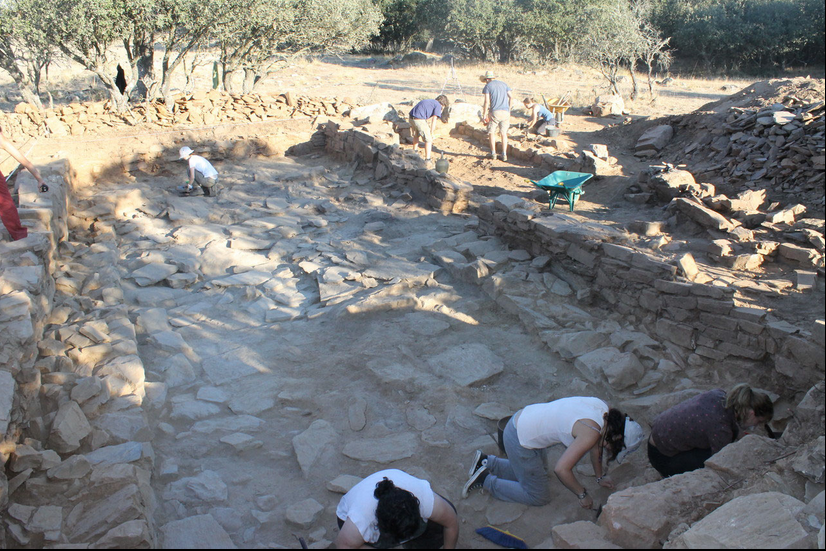
Zamora Protohistórica’s website.» width=»826″ height=»551″> A picture of El Castillón during its excavation. Picture retrieved from Zamora Protohistórica’s website.
It is a magnificent expression of the Iron Age and the Late Antiquity (5th century A.D.) and, subsequently, this site is extensively known by the archaeological community of Spain and a great quantity of other countries’ regions. Zamora Protohistórica Association manages this site’s excavation and diffusion since 2007.
The first approach to this place leads to the identification of two greatly differentiated areas.
Firstly, there is the aforementioned fortification of El Castillón itself. There, archaeologists have found several rooms dated in the Iron Age with different items such as stamped ceramic, glass objects for cooking, or some personal belongings such as glass beads. The wall, whose visit is highly recommended, remains as a greatly noticeable evidence.
The cornerstones of one of the first churches built in the Early Middle Ages have been discovered in these latest campaigns, complementing this finding with other circumstances such as the discovery of three bodies on a medieval necropolis whose unerring relation with the different chronological phases of this site has been established.
The other interesting thing that can be identified is the Abrigo de El Castillón (El Castillón’s Shelter), where several schematic rock art representations are located. It can be found in a small cave located in a rocky ledge in the East of this area.
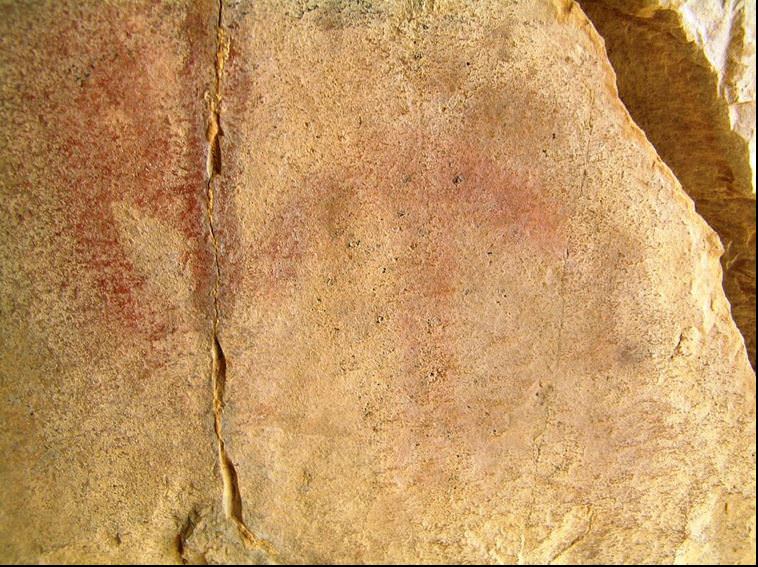
A schematic representation of rock art located on the hill’s shelter. Picture retrieved from Zamora Protohistórica’s website.
Certainly, this is an archaeological site that covered a very significant visual space, which can be accessed by bicycle. Regarding its emplacement, it is located in the passage of the Camino of Santiago, or the way of Saint James, very near to the currently known as Via de la Plata, or the Silver Route, which linked Emerita Augusta (Mérida) with Asturica Augusta (Astorga), and that runs parallel to its left side.
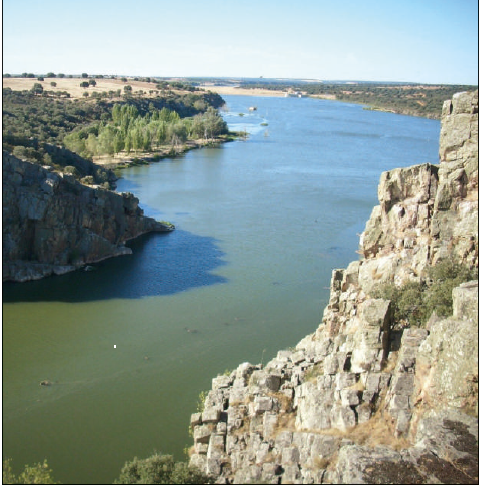
The location of this settlement at the top of the hill enables its domain over the area.
Do you want to know more about its chronology, the excavation’s’ beginning, or the open day? Check Zamora Protohistórica’s website
0