


Cristo del Otero, named after the place where it stands[1], is a large sculpture located in Palencia. The hillock where it stands is located in an antique Miocene clay hillock, which is heavily eroded. However, the statue receives a much less popular name: Monumento al Sagrado Corazón de Jesús.
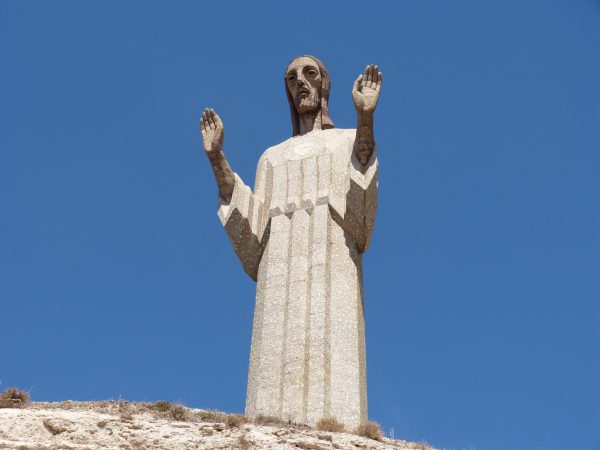
This Victorio Macho work can be seen from anywhere in the city, or even outside the city, and was built in 1930. It is 30 meters high which makes it stand out more in a completely flat city and from where you can get a panoramic view of the city and its surroundings. The statue seems to be blessing the city and its style resembles Art Déco, with cubist details and the ancient Egypt art, due to the solemn posture of the statue.
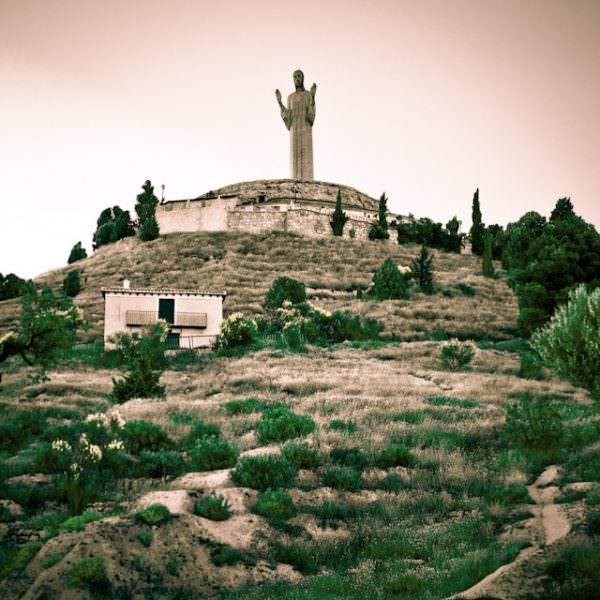
According to touristic leaflets, it is the world’s second tallest statue of Jesus Christ, after Rio de Janeiro’s statue, even though this is still controversial. Below Cristo del Otero, there is a hermitage with three naves, known as Santa María del Otero. Furthermore, this is the place where the sculptor Victorio Macho is buried and there is also a small museum where his work can be seen. He was also the author of the sculptures dedicated to Benito Pérez Galdós and Ramón y Cajal, both located in El Retiro Park, in Madrid.
At the hermitage’s entrance, a small esplanade and viewpoint is located, from where you can get a panoramic view of the city. In 2014, intelligent lighting was installed in Cristo del Otero, which has a great variety of colors that change instantly. Years ago, the inside of Cristo del Otero used to be accessible which allowed people to peek through the windows placed in the eyes of the sculpture.
One of its better known traditions, celebrated in the Sunday nearest to April 16th, is romería de Santo Torobio. Legend has it that when the saint tried to make known the original Catholicism to Palencia inhabitants, who were following Priscillianism, considered to be heretic, he was stoned and expelled from the city. After that, Saint Toribio took shelter in Santa María del Otero hermitage. Then, the catastrophic Carrión river flooding took place and all inhabitants went to the hillock where Saint Toribio took shelter, and he did not hesitate to forgive them.
In honor of this legend, some Palencia inhabitants “stone” others, who try to take young people with them, with bread and small pieces of cheese. This tradition earned the Interés Turístico Regional flagship in 2007.
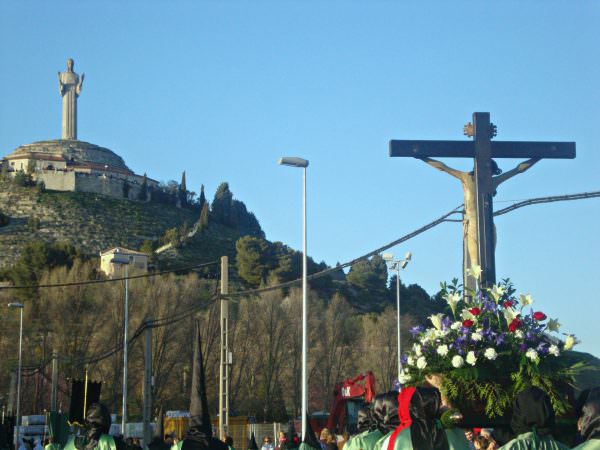
Climb to the Christ during a procession of Holy Week