


Alcázar of Segovia is one of the most remarkable and visited monuments in Spain. It is located in Ciudad Vieja, designated World Heritage site in 1985. In 1931, it was designated historical and artistic monument. Moreover, Patronato del Alcázar was created in 1953 to manage the museum that can be visited inside it.
Throughout its history, the álcazar had been a Roman castrum, a medieval fortress, a royal palace, a state prison, a royal artillery college, a military archive and it was even used to guard the royal treasury. It was constructed at the end of the Middle Ages and beginning of the Early modern period and it is the most peculiar palace due to its shape that resembles the bow of a ship.
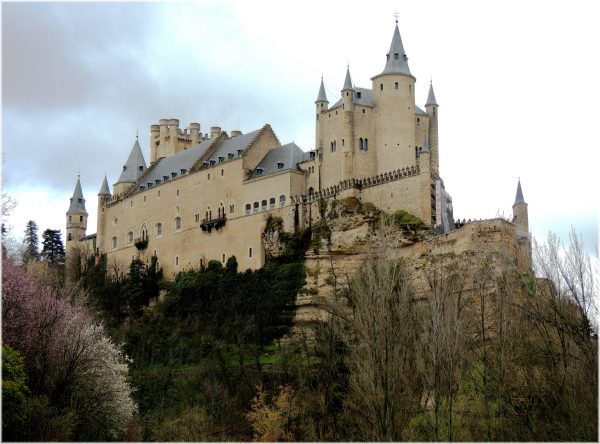
The oldest remains found were granite stones, similar to the ones found in the Roman aqueduct located in Segovia, which indicates that a fortress must have been there during the Roman period. The álcazar was built where those remains were, as a Hispano-Arabic fortification. However, the first written evidence dates back to 1122, shortly after Alphonse VI reconquered León, and it was not referred to as “alcázar” until 1155. Moreover, it was where Alphonse VIII used to live, and in 1258 the drill hall of the palace collapsed when Alphonse X was inside it. It was restored and enlarged several times, probably from Alphonse X to Philip II, thanks to whom the shape of this palace is unique.
During the Middle Ages, the palace quickly became of the favorites dwelling places for the Kings of Castille, especially Alphonse X, due to its security and proximity to hunting areas. Furthermore, it had been inhabited several times and it even became the most luxurious palace of the 15th century, being witness to some of the crucial events of Spain’s history, such as the proclamation of Isabel I of Castille, or Philip II and Anna of Austria’s misa de velaciones (a mass offered after a wedding in order to facilitate the Christian education of their children.)
The fortress then served as a prison for years until Charles III funded in 1762 Real Colegio de Artillería and it became its headquarters. In 1862, a fire destroyed most of the ceilings which were luckily reconstructed thanks to the accurate engravings made by José Avrial y Flores.
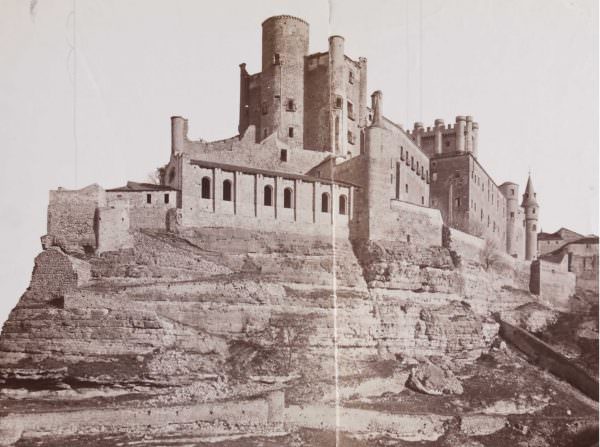
The palace is divided in two areas:
-Outside: with an iron courtyard, a moat, a drawbridge and a keep.
-Inside: with a chapel, and rooms such as Sala del Trono, Sala de la Galera, Sala de las Piñas or Sala de los Reyes which can be still visited nowadays. Currently, Museo de Armas and Archivo General Militar de Segovia, Spanish army’s oldest historical archive, are located there.
0